The Challenge
Legal counsel required an independent hazardous materials expert to evaluate transportation-related activities associated with an incident involving regulated materials that allegedly resulted in personal injury. The matter involved complex questions regarding regulatory requirements, industry practices, employee responsibilities, training obligations, incident circumstances, potential hazardous materials exposure, and the application of hazardous materials transportation regulations. Attorneys needed a subject matter expert capable of translating highly technical transportation, safety, and regulatory concepts into clear, understandable conclusions supported by industry standards and regulatory requirements. The case also required evaluation of how hazardous materials regulations intersected with operational practices, employee actions, training programs, and management systems. Understanding those relationships was critical to determining whether the incident resulted from regulatory noncompliance, operational failures, human factors, or a combination of contributing circumstances.
STARS’ Assessment Process
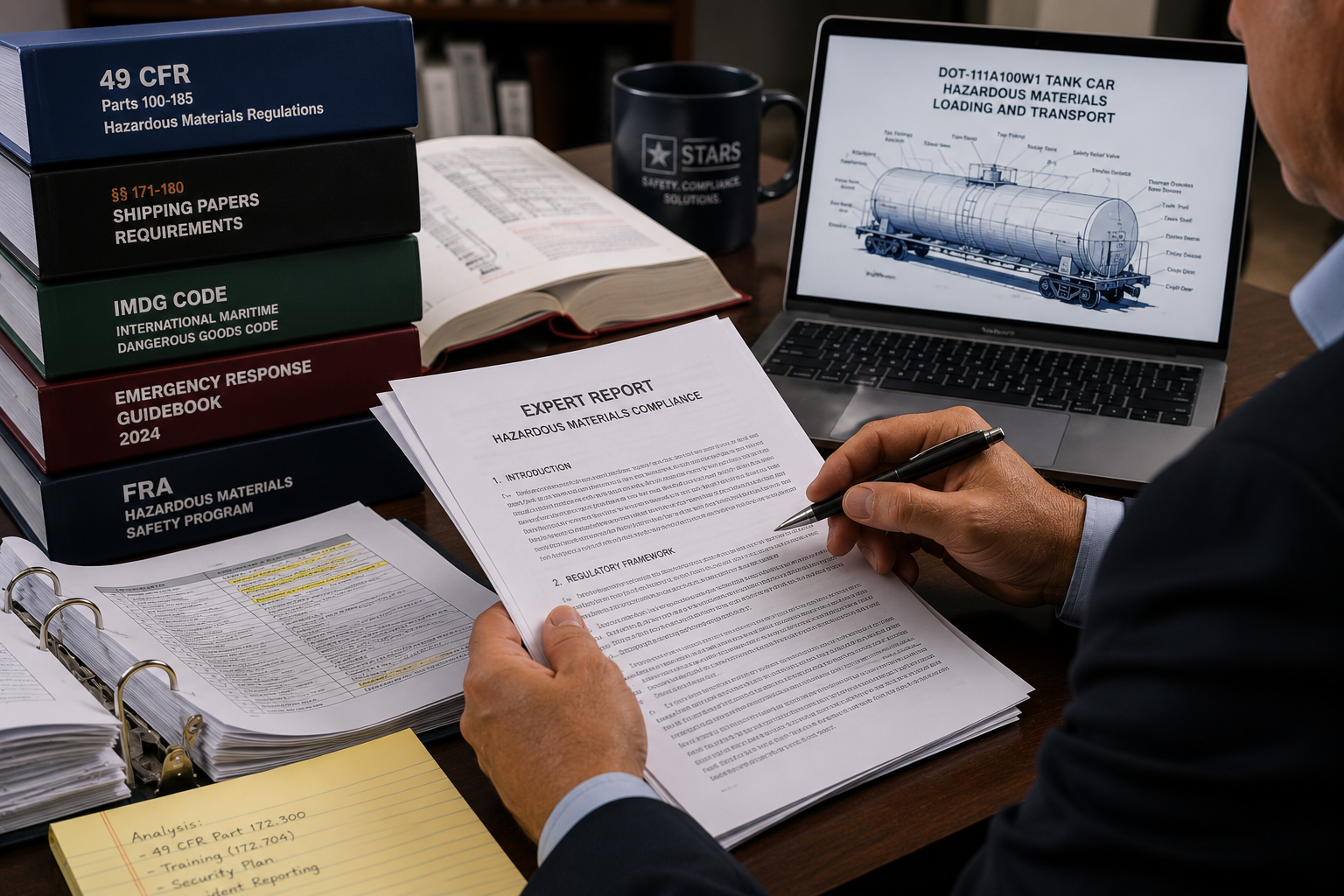
STARS conducted a comprehensive hazardous materials transportation compliance assessment that included a review of shipping papers, employee training records, written procedures, package markings, labels, and day-to-day operational practices. The analysis focused on understanding what activities occurred, what regulatory requirements applied, what responsibilities existed, whether actions were consistent with accepted industry practices, and how those factors related to the incident and resulting injuries. Particular attention was given to separating factual evidence from assumptions and evaluating transportation activities within the context of real-world hazardous materials operations. The review also considered how employee training, company procedures, operational controls, management oversight, emergency response actions, and potential exposure pathways may have influenced the events under examination.
Key Findings
- Several technical, regulatory, and safety-related issues required clarification to accurately evaluate the facts of the case.
- Certain assumptions regarding hazardous materials responsibilities, exposure risks, and incident circumstances were not fully supported by the available evidence.
- Additional context regarding transportation operations, employee responsibilities, and industry practices improved understanding of the events involved.
- Regulatory requirements and operational realities were not always aligned with initial interpretations of the incident.
- Multiple contributing factors required consideration when evaluating the circumstances surrounding the incident and resulting injuries.
Corrective Actions
As an expert witness engagement, the objective was not corrective action implementation but independent technical evaluation and communication of findings. STARS prepared detailed analyses explaining applicable regulatory requirements, transportation practices, employee responsibilities, incident circumstances, and industry standards relevant to the issues under review. Findings were communicated in a manner designed to assist attorneys, judges, juries, insurers, and other stakeholders in understanding the technical aspects of the case and the factors relevant to the injury claims.
The Results
Counsel gained access to experienced hazardous materials transportation expertise capable of evaluating regulatory requirements, operational realities, incident circumstances, and safety considerations. Technical issues were clarified, complex transportation and hazardous materials concepts were translated into understandable language, and legal teams obtained a stronger understanding of the facts, compliance considerations, and injury-related issues relevant to the matter. Most importantly, the analysis provided an objective, technically grounded perspective based on hazardous materials regulations, industry practices, incident investigation principles, and real-world transportation experience.
Need help with a similar hazmat compliance issue?
STARS helps companies turn hazardous materials compliance concerns into practical, operationally workable solutions.
Talk With STARS →